

The maintenance methods of four-axis and six-axis industrial robots cover many aspects such as daily maintenance, maintenance cycles and maintenance steps. These maintenance measures are designed to ensure the proper functioning of the robot and extend its service life. Here are some specific care recommendations:
1. Daily maintenance
Routine maintenance is the key to ensuring the long-term stable operation of industrial robots. The operator should clean and inspect the robot every day, including removing dust, oil and other impurities, and check whether there are cracks or damage in each part. In addition, it is necessary to check the oil seal of the robot to prevent the accumulation of oil, and open the fat discharge port and oil discharge port after operation to restore the internal pressure. At the same time, after powering on, the vibration, abnormal sound and motor heating of the robot should be checked to confirm the smooth movement of each axis and the temperature of the motor is not abnormally increased.
Second, the maintenance cycle
The maintenance cycle of industrial robots is not fixed, but is determined according to factors such as the frequency of use of the robot and the working environment. In general, the most common maintenance interval is 3 or 6 months. For robots that are used frequently and have a harsh working environment, it is recommended to maintain them every 3 months. During the maintenance interval, the robot should be thoroughly inspected and maintained to ensure that it is in optimal working condition.
3. Maintenance steps
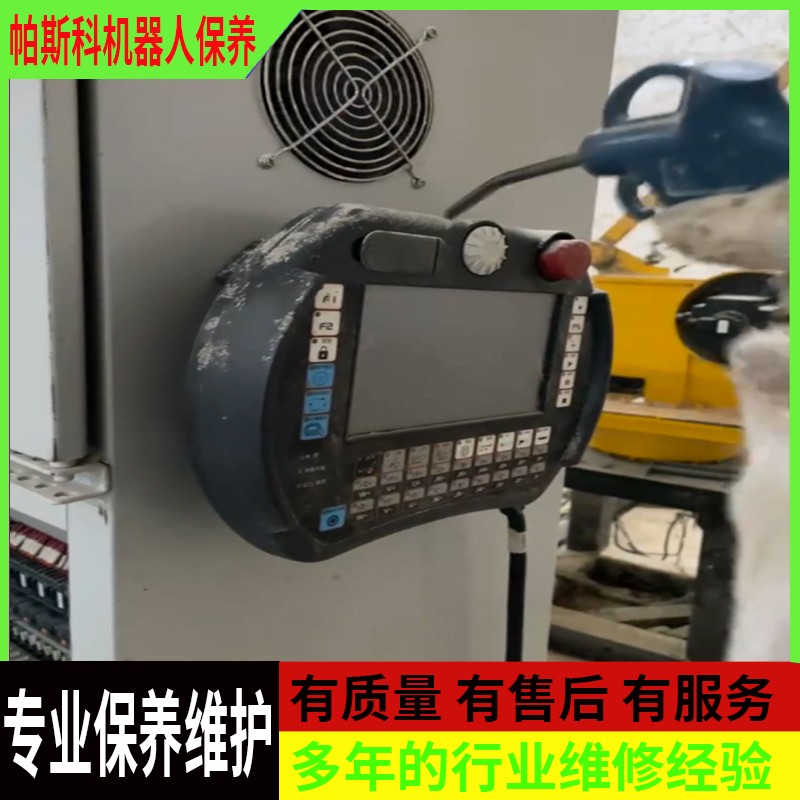
Maintenance steps typically include cleaning, lubrication, replacement of wear parts, etc. When cleaning, special attention should be paid to the cleaning of the cooling fan and air inlet/outlet, using a dust brush and vacuum cleaner. When lubricating, the appropriate lubricant should be selected and applied to each lubrication point as required. For wearing parts, such as filter cloths, batteries, etc., they should be replaced in time according to their service life. In addition, the robot's electrical system should be checked to ensure that the cables, sensors, and other components are working properly.
Fourth, targeted maintenance suggestions
Considering the particularity and needs of industrial robots, the following are some targeted maintenance suggestions:
For robots used in high-temperature environments, the internal pressure of the grease and oil groove should be checked regularly to avoid poor lubrication caused by high temperatures.
For robots that often perform reversal actions, the inspection and maintenance of the motor and transmission system should be strengthened to prevent the occurrence of failures.
For robots used in wet environments, the robot body and surrounding environment should be dried regularly to prevent rust and corrosion.
When carrying out maintenance, you should refer to the operation manual of the robot and the manufacturer's recommendations to ensure the correctness and effectiveness of the maintenance work.
To sum up, the maintenance methods of four-axis and six-axis industrial robots need to comprehensively consider multiple aspects such as daily maintenance, maintenance cycle and maintenance steps. By implementing these maintenance measures, you can ensure the normal operation of the robot, extend its service life, and improve production efficiency.
德律风:400-0000-000
邮箱: pasikebaoyang@163.com
地点:168官网预测赛果记录省,泰安市,肥都会泰临路301号

 扫扫扫存眷公家号
